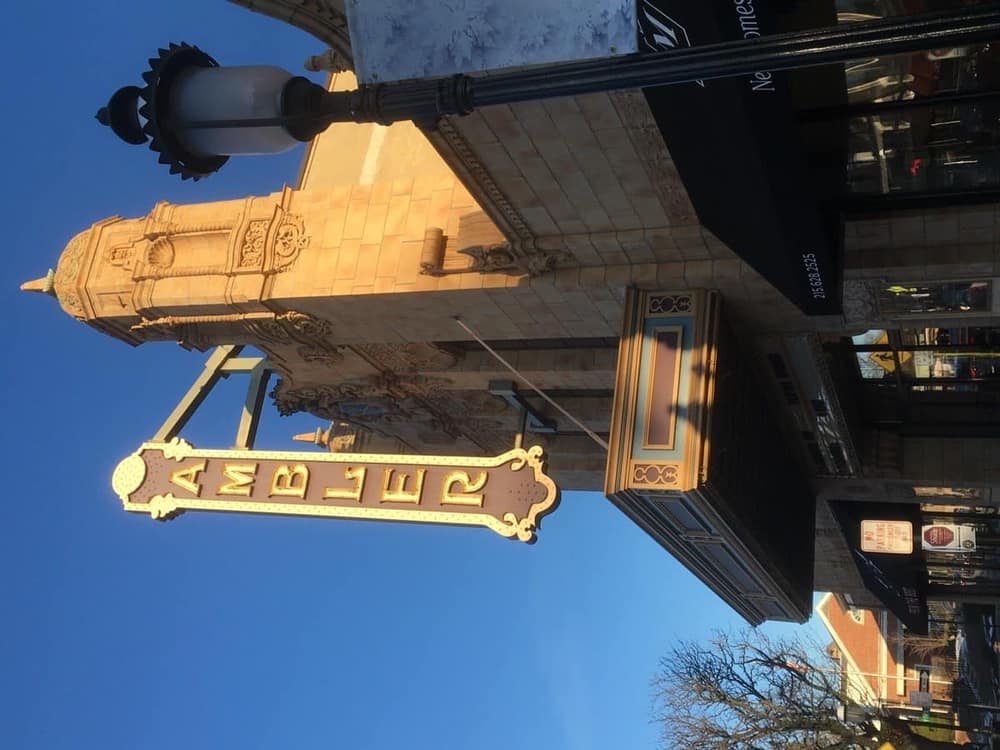
Ambler Theater
A 1928 movie house rescued and restored into the anchor of Butler Avenue: first-run indies, documentaries, and repertory picks under a marquee that makes the whole block look good.
Every landmark spot we vouch for, across every town we cover. Cross a town line for the good ones. That's the whole point.
A 1928 movie house rescued and restored into the anchor of Butler Avenue: first-run indies, documentaries, and repertory picks under a marquee that makes the whole block look good.
The Old Trappe Church, built between 1743 and 1745, served as a Continental Army field hospital and has been a National Historic Landmark since 1967. Henry Melchior Muhlenberg was pastor here from 1742 until his death in 1787, and the congregation still holds 8 am communion in the old stone building.
Five stories of used and rare books inside an 1822 stone barn, wood-burning stove included. Open 10 to 5:30 every day except Thanksgiving, Christmas, and New Year's Day.
Frank Lloyd Wright's only synagogue, a National Historic Landmark on Old York Road in Elkins Park. Guided tours book online and are the only way to see the documentary The Story of Beth Sholom.
The landmark Victorian building at the center of Ursinus College, bell tower and all, with Bomberger Auditorium inside for concerts and lectures. Worth a look if you're walking the campus off Main Street.
Jenkintown's own town square on Greenwood Ave, the bit of open ground the borough keeps for gathering. Benches and brick, and whatever the season puts on it.
A 125-foot fieldstone tower raised between 1929 and 1931 atop Bowman's Hill, a few miles south of New Hope in Washington Crossing Historic Park. On a clear day the top gives you a 14-mile sweep of the Delaware and the farmland around it.
A women's liberal arts college founded in 1885, one of the Seven Sisters. The stone Collegiate Gothic campus off Merion Ave is open to walk, and Goodhart Hall carries public performances.
A converted 1790 grist mill on the Delaware that's been staging shows since 1939, where Grace Kelly made her professional debut and Robert Redford premiered "Barefoot in the Park." Summers still mean full-scale musicals like this season's South Pacific and Rent, with dinner on the Playhouse Deck over the river before curtain.
The Coatesville Community Water Fountain is a public fountain and small gathering spot in the middle of town. Worth a pause if you're walking downtown.
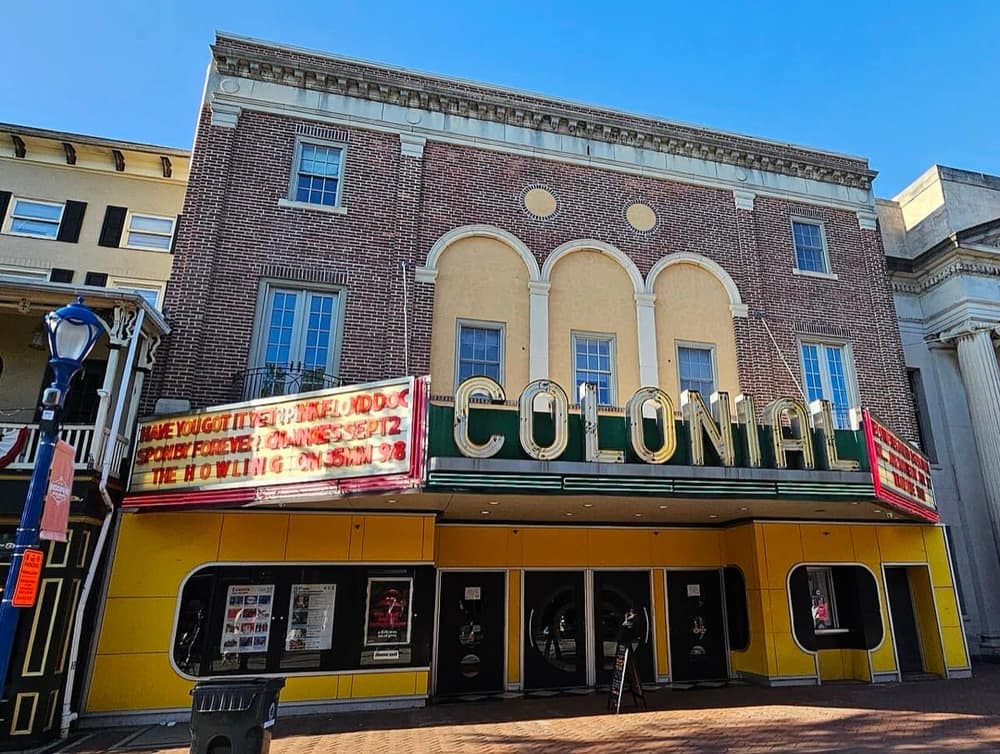
The 1903 movie palace where The Blob attacked the audience in 1957, still packing three screens with indie, classic, cult, and horror films plus live shows. Bridge Street's marquee glow, and the whole reason Blobfest exists.
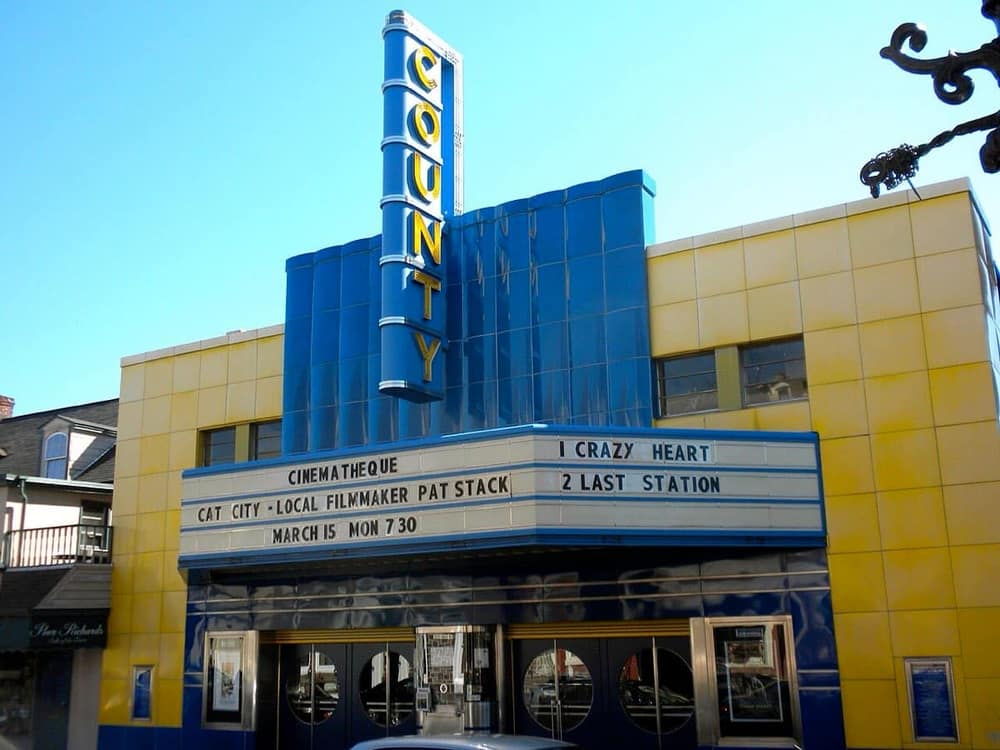
Doylestown's art-deco nonprofit cinema, running first-run indies and classics under a marquee that's been lighting State Street since 1938. Cheap tickets, real butter, serious air conditioning.
The towpath runs 58.9 miles from Easton to Bristol, the last fully intact canal left from America's towpath era, and the flat, shaded New Hope stretch is the walk or bike ride you point visitors toward. Mules hauled coal barges down this water into the 1930s, and the Locktender's House by the lock still lays out how the whole thing worked.
The old mule-towpath runs flat and straight through the middle of Yardley, part of a 59-mile canal path from Easton down to Bristol that Congress named a National Historic Landmark. Point a bike south and it's about 4.5 shaded miles to Washington Crossing, with ice cream stops along the way.
The flat crushed-stone towpath that runs 60 miles from Easton to Bristol, and the New Hope stretch is the gentle one: pick it up by the restored Lock 11 and walk the canal one block off Main Street, past the backs of the shops. Mule teams towed barges along here into 2006, which is why it's dead level the whole way, good for a two-mile out-and-back before dinner.
A pocket of riverbank at the foot of Ferry Street where the Delaware slides past and Lambertville sits across the water. Washington's army crossed here at Coryell's Ferry in June 1778 on the way to Monmouth; now it's a few sculptures, some benches, and the ducks.
A small roadside monument on Glenwood Ave marking the local claim to the first female college in the country. Two minutes to read the plaque, and a decent excuse to learn how Collegeville got its name.
Two and a half acres of green on the Delaware where South Delaware Ave dead-ends at the river. The Yardley Business Association pours its Beer & Wine Festival here every October, and Harvest Day sets up bands on the grass come fall.
Pennsylvania's official 9/11 memorial, a 2.5-acre garden inside Lower Makefield's 62-acre Memorial Park, designed by Yardley architect Liuba Lashchyk and dedicated on the fifth anniversary of the attacks. The walking memorial honors all 2,973 victims, 18 of them from Bucks County, and moves deliberately from grief toward light.
The Keith House is the only surviving residence of a colonial Pennsylvania governor, anchoring the 42-acre grounds of Horsham's lone National Historic Landmark. Guided tours run Friday through Sunday; the nature trails and picnic spots are yours the rest of the time.
The stone castle at the center of Arcadia University's campus on South Easton Road. A former private mansion with turrets, and the building people mean when they say the castle in Glenside.
Georgian house museum that was home to Revolutionary War general Anthony Wayne, held by seven generations of the Wayne family from 1724 to 1965. Now a National Historic Landmark on ten acres in neighboring Paoli, run by PhilaLandmarks as a tour-able house museum.
Jenkintown's restored cinema on York Road, a nonprofit art house running indies, revivals, and community nights. The neon marquee is a landmark in its own right.
Ween got their start on this stage, and the room has run live music seven nights a week since 1972. Grab one of 150 seats, order the 8oz burger, and you might catch a name between arena tours playing to a barful of neighbors.
A hand-dug millpond from the early 1700s that's now the scenic middle of Yardley: skate it in January, fish it in July. Take the gravel promenade along Afton Avenue and watch for turtles and the geese working you for bread.
Bucks County's biggest municipal park at 122 acres, dreamed up by Sellersville's David Cressman and built by the WPA in the 1930s, with twin Roebling suspension bridges strung over the East Branch Perkiomen. Come for the 18-hole disc golf course, the 3-plus-mile creek path, or the ice rink once the pond freezes over.
The spillway pours over a low WPA-built dam into the East Branch of the Perkiomen Creek, the natural halfway point on the loop that circles this 122-acre park straddling Sellersville and Perkasie. Twin suspension bridges from the Roebling company (the Brooklyn Bridge people) cross the water just upstream, and the lake behind the dam was dedicated in September 1937.
The Bala Cynwyd half of Laurel Hill, a historic cemetery and certified arboretum spanning 265 acres across its two locations, open to the public free, 365 days a year. Grounds hours run 7 am to 7 pm in summer, 7 to 5 in winter.
A skinny linear park that threads between Ferry and Bridge streets along an old quarry cut, with a gazebo, a small water feature, and enough shade to eat lunch out of the sun. Locals call it the Quarry; it's easy to walk right past by the railroad tracks, and it's stood in for more than a few tiny weddings since the borough built it in 2008.
The stone house on West Broad where the Liberty Bell reportedly spent a night in September 1777, hidden from the British on its wagon haul from Philadelphia up to Allentown. A quiet local landmark most people drive past without knowing what happened here.
The du Pont horticultural giant three miles northeast of town, where the Main Fountain Garden runs May 8 through October 25 and A Longwood Christmas takes over from November 20 into early January. Timed tickets are required, and it closes Tuesdays most of the year.
A piece of World Trade Center steel, back in the town that helped forge it. The memorial sits beside the steel museum on South First Avenue.
Ten acres on East Main Street with a memorial to Lansdale's deceased war veterans, a lighted baseball field backed by a concrete grandstand, and lighted tennis and pickleball courts. A footpath and gazebo cover the slower afternoons.
Perkasie's borough pool has anchored Menlo Park since 1939, rebuilt in 2007 with a lazy river and a drop slide off the 13-foot deep end. Day passes run $11 to $32, it's open noon to eight all summer, and members get the lanes to themselves for 7am laps before the gates open.
The carousel here has been spinning since Perkasie families first pooled their money for one in 1891, and the current Allan Herschell model has run since 1951. Come summer there's a public pool and a playground with a zip line, but the merry-go-round is the reason you drive over.
A 1695 meetinghouse founded by Welsh Quakers who arrived in 1682, now a National Historic Landmark and the second-oldest Friends meetinghouse in the country. It is still an active congregation, with silent worship every Sunday at 11 am and a burial ground holding an estimated 2,000 graves, many unmarked in early Quaker custom.
An 1874 covered bridge over the Perkiomen's northeast branch, burned by arson in 2004 and rebuilt in period lattice-truss style, reopening in February 2008. One salvaged piece of the original truss is built into the new frame, and it still carries about 2,000 cars a day just outside town.
Henry Mercer built this tile factory between 1911 and 1912, and it still presses handmade Moravian tiles today. Tour the historic workshops and watch the craftsmen at work, or make your own 3-inch tile to pick up about four weeks later.
The town's backyard off Windsor Ave, with a playground, ball fields, and a community pool for summer. It's the default spot for Little League and long afternoons outside.
A Polish-American Catholic shrine founded in 1955 on Beacon Hill, the highest elevation in Bucks County. Sunday Mass runs in Polish at 12:30, and the grounds include a cafeteria, Polish deli, and religious-goods store.
Open on State Street since 1940, named for Edward "Ned" Maher, who shipped out and died at Anzio before he ever got to run the place. Regulars rent a locker to keep their own Scotch or Bourbon on hand and sip while they smoke.
A working public airfield (FAA code N57) a few miles west of town that doubles as a spectator spot, with Cars, Coffee, & Airplanes mornings on the ramp. The Festival of Flight air, car, and antique-aircraft show returns August 8 and 9, 2026.
Heritage trains have departed the 1891 Witch's Hat station on West Bridge Street since 1966, rolling south through the Buckingham Valley on tracks first laid by the North-East Pennsylvania Railroad. The lineup now includes four-person pedal-assist rail bikes if you would rather ride the rails at 5 mph yourself.
Open on State Street since 1869, with the original wood floors and rolling ladders still in place after the whole building burned in 1899 and got rebuilt to the exact same plans. Still a working hardware store where someone will track down the odd washer for you, with a cookie rack up front whose proceeds go to a local pancreatic cancer fund.
The Newtown Historic Association's free archive, where you can pull deeds, wills, diaries, and photographs back to 1725, when Newtown was the county seat. It keeps a deep file on Edward Hicks, the Quaker preacher and folk painter who lived here, and opens for house-history and genealogy digs Tuesday mornings and Thursday nights.
The site of the 1777 Battle of Paoli, where a British night bayonet raid on Anthony Wayne's men turned into a Revolutionary War rallying cry. Open ground with walking paths and one of the oldest war monuments in the country.
This is the Paoli Battlefield, where Continental soldiers were killed in a 1777 night raid during the Revolution. Now it's quiet grounds on Monument Avenue with one of the country's oldest Revolutionary War memorials and marked graves.
Sixty-plus locally owned shops, plus restaurants, gardens, and the Giggleberry Fair family playscape, just west of New Hope in Lahaska. It has pulled in day-trippers for more than 60 years, and USA Today's 10Best readers named it the country's number-one shopping center in 2026.
A carousel that's been part of Menlo Park since 1892, now run by the Perkasie Historical Society for about a dozen days a year. Check the schedule before you load the kids in the car — it's dark most of the summer, and catching a day it actually turns is half the point.
Volunteers have kept Perkasie's history since 1954, with a museum wedged into a former Lehigh Valley Transit trolley station on Walnut Street that opens weekend afternoons, May through December. They also look after the 1832 South Perkasie covered bridge and the Menlo Park carousel, where a ride still runs fifty cents.
Sixty-odd Carpenter Gothic cottages, gingerbread trim and all, ringed around an open-air auditorium: a Methodist camp-meeting community that opened in 1882 and never really shut down. Founders' Day in early August is when the private grounds open up for cottage tours.

A long-abandoned SEPTA freight car at N. 8th and W. Market, painted by Promiseland Murals in fall 2025. Free and open-air — walk up and snap photos anytime, with municipal parking nearby.
Built in 1912 so the Lehigh Valley Transit trolley could duck under the Reading Railroad, this stone tunnel carried the interurban line that ran hourly from Allentown down to Philadelphia until the cars stopped in 1951. The trolleys are long gone, but the tunnel still stands on the old right-of-way, one of the last things you can walk up and touch from that line.
Six stone arches have carried Ridge Pike over Perkiomen Creek since 1799, one of the oldest stone arch bridges still in use in the country. Residents burned down toll booths twice, in 1867 and 1872, rather than pay to cross it.
The indoor market locals call Q-Mart, with more than 100 farmers market departments selling produce, meats, baked goods, and just about anything else with a price tag. Open year-round, Friday and Saturday 9 to 9 and Sunday 10 to 5.
The restored train station on Front Street, kept up by volunteers who care about how Quakertown moved by rail. A small stop for anyone who likes old depots and the era they belong to.
A third of an acre of plaza beside the SEPTA station, and the spot where downtown Lansdale's festivals and street events tend to set up. More town square than park — Main Street on one side, the tracks on the other.
Narberth's own two-screen movie house on Narberth Avenue, first-run films a short walk from dinner. The neighborhood answer to a multiplex parking lot.
Phoenixville's public square since 1872, a gift from Phoenix Iron Company president David Reeves, with a bandshell restored from 1908 postcards and a Civil War Griffen cannon still parked on the grounds. The Dogwood Festival takes it over each May; a playground handles the rest of the year.
A public 18-hole course off Country Club Drive, owned by former Eagles quarterback Ron Jaworski. Tee times are open to anyone, no membership required.
A community-built labyrinth off East Park Ave, free to walk any time you need to slow your head down. The people behind Shanteel Yoga Sanctuary laid it out as an open meditation path — no class, no sign-up, just the pattern under your feet.
The historic shopping stretch along Skippack Pike, a couple of blocks of gift shops, restaurants, and old stone storefronts. Park once and work your way down both sides.
A historical landmark tied to Souderton's old rail line, out on Heatherfield Drive. More a piece of local history than a working stop these days.
Bucks County's oldest covered bridge, built in 1832 and hauled a mile to Lenape Park over eight days in 1958 to save it from demolition. Hurricane Ida shifted it about 15 feet off its abutments in 2021, so for now it's a look-from-the-outside landmark while a FEMA-funded restoration works through the pipeline.
A 75-foot Burr truss covered bridge from 1881, on the National Register since 1980 and carrying cars over Buck Run again since a faithful 2016 PennDOT rebuild (an overloaded steel truck wrecked the original span in 2011). Its identical twin, the Mary Ann Pyle Bridge, stands a quarter-mile away.
The liberal-arts college anchoring the east end of Collegeville, with walkable grounds and the Berman art museum on campus. The kind of place you cut through on a nice day even if you never went there.
A memorial green off Viet Alley honoring West Chester's veterans. Flags and benches and a quiet place to sit downtown.
Victor Abdala Sr. Memorial Park is a small neighborhood green on Olive Street, named for the local it remembers. Bench space and a bit of quiet on Coatesville's side streets.
The stadium off Campbell Drive that hosts Downingtown high school football on fall Friday nights. The kind of place the whole town turns out for.
Wharton Esherick's hand-built hillside studio is the exhibit itself: a National Historic Landmark for Architecture holding his furniture, sculpture, and hammer-handle chairs. Tours run March through December, Wednesday to Sunday, advance reservations required.
Two white suspension footbridges the WPA strung across Lake Lenape in 1938, modeled on the same Roebling design behind the Brooklyn Bridge. Roughly 500 feet of towers and cable over the creek, and still the only suspension bridges anywhere in Pennridge.
Drop a filter or clear the search. Everything on this page made the cut.
Show everythingBurby
Your dog in the burbs